

In a nutshell:
- Multilingual AI in customer service enables real-time translation and automated replies across languages. It accelerates response times and expands global coverage. But AI translation accuracy in customer service is not perfect. Context loss and tone errors can damage trust.
- Multilingual AI works best when used for FAQs and order status, shipping and tracking updates, account access issues, knowledge base search, first-pass triage, and multilingual chatbots.
- Human customer support should still take over major escalations, complicated refunds and billing disputes, policy explanations, and when dealing with VIP customers among others.
- The safe way to scale multilingual support with AI is a human-led, AI-assisted model.
Let’s break down when multilingual support AI is a growth accelerator and when it becomes a brand risk.
What is multilingual AI in customer service?
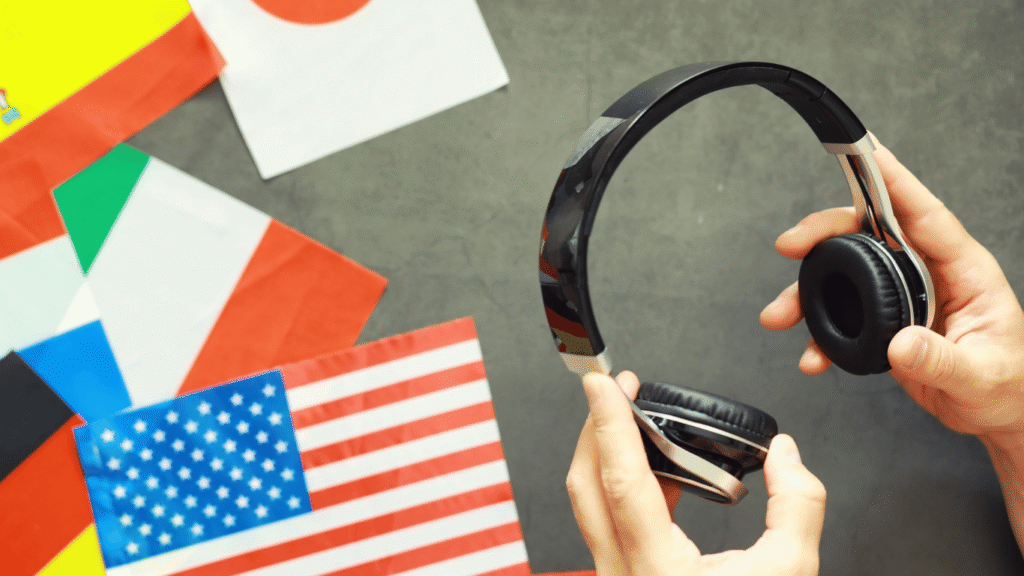
Multilingual AI in customer service is the use of artificial intelligence to understand, translate, and respond to customer inquiries across multiple languages in real time. It powers cross-language customer conversations without requiring a human agent fluent in every language.
Conversational AI is rapidly becoming embedded in core customer service workflows, not just experimental pilots. Meanwhile, it’s estimated that generative AI could deliver significant productivity gains in customer operations, making multilingual automation especially attractive for global brands.
Where it shows up today
You’re likely already using multilingual customer support AI in some form or type like these examples:
- AI chatbots and virtual agents
- Auto-translation in live chat and email
- AI-assisted replies for human agents
- Multilingual knowledge base search
- First-pass ticket triage across regions
- Integration with existing tools and ticketing systems that support real-time translation
- Translation tools that help maintain translation quality and consistency, often using glossaries for brand tone and terminology
- Multilingual knowledge base articles and help centers providing self-service solutions in multiple languages
The technology is real. The question is whether it’s reliable enough to protect your brand.
Why multilingual support became a CX priority in 2025–2026
Global commerce didn’t just expand. It also became fragmented.
Customers expect local experiences even from global brands. Multilingual customer support is essential for businesses to effectively communicate with a diverse and global customer base. When you offer multilingual support, companies can tap into new markets and attract a broader audience, which is crucial for international customers and expansion. That’s why companies that invest in multilingual support demonstrate a commitment to customer care and cultural sensitivity, enhancing their brand reputation.
Global customers expect local experiences
Research consistently shows that customers are far more likely to purchase when information is presented in their native language.
Offering English-only support limits conversions in non-English markets, reduces retention, and signals “you’re not our priority market.” Global customer experience AI emerged because customers expect instant, native-language support. Yes, even at 2 AM.
Scaling humans alone doesn’t work
Hiring multilingual agents sounds simple, but in reality:
- Niche language specialists are expensive. Hiring multilingual support agents and multilingual staff, especially native speakers, ensures high-quality, culturally appropriate customer service across real-time channels like voice and chat. However, hiring native speakers is also often the most expensive approach to providing multilingual customer service.
- Building an in-house multilingual support team allows for deep alignment with company culture and product knowledge, but requires significant resources. Coverage gaps persist across multiple time zones, making it challenging to provide consistent support globally.
- Long-tail languages generate low volume and still demand quality.
The choice between outsourcing and in-house support often depends on your company’s size, budget, and specific customer needs. This is where AI language translation for support became appealing: scalable, instant, always on.
If your global customers are growing faster than your support coverage, LTVplus builds multilingual CX teams that scale without sacrificing quality.
The case for multilingual AI as a gamechanger in breaking language barriers
When deployed correctly, multilingual AI in customer service delivers measurable upside:
- Multilingual AI enables exceptional service by breaking language barriers and providing seamless support across diverse languages, ensuring customers receive quick and accurate assistance.
- AI-powered multilingual support allows businesses to provide immediate, localized support, facilitating rapid entry into new markets and reaching broader demographics.
- AI provides round-the-clock global coverage without the need for expensive night shifts or regional teams, and can manage the workload equivalent to hundreds of full-time agents across multiple languages.
Faster first response times
AI translation eliminates language-based queues. So instead of routing Spanish tickets to a limited pool of Spanish-speaking agents, AI translates instantly and distributes workload, enabling instant support by handling customer queries in real time. AI can manage the workload equivalent to hundreds of full-time agents across multiple languages, resulting in faster response times and improved customer satisfaction.
Benefits:
- 24/7 coverage without language-based queues
- Reduces first response time
- Higher SLA compliance
Speed wins trust, at least initially.
Cost-efficient global coverage
AI handles:
- Long-tail languages
- Low-volume regions
- Repetitive FAQs
- Provide self service options such as multilingual help centers and chatbots
Self service options empower customers to find information on their own in multiple languages, improving efficiency and reducing costs. This reduces reliance on hard-to-hire language specialists. Used correctly, AI supports global expansion without ballooning payroll.
Agent productivity gains
AI assists agents with:
- Real-time translations
- Ticket summaries
- Suggested replies
- Context recall
AI tools enable personalized support and leverage multilingual capabilities to enhance agent productivity, so agents focus on resolution, not language mechanics.
But here’s the catch…
Where multilingual AI turns into chaos
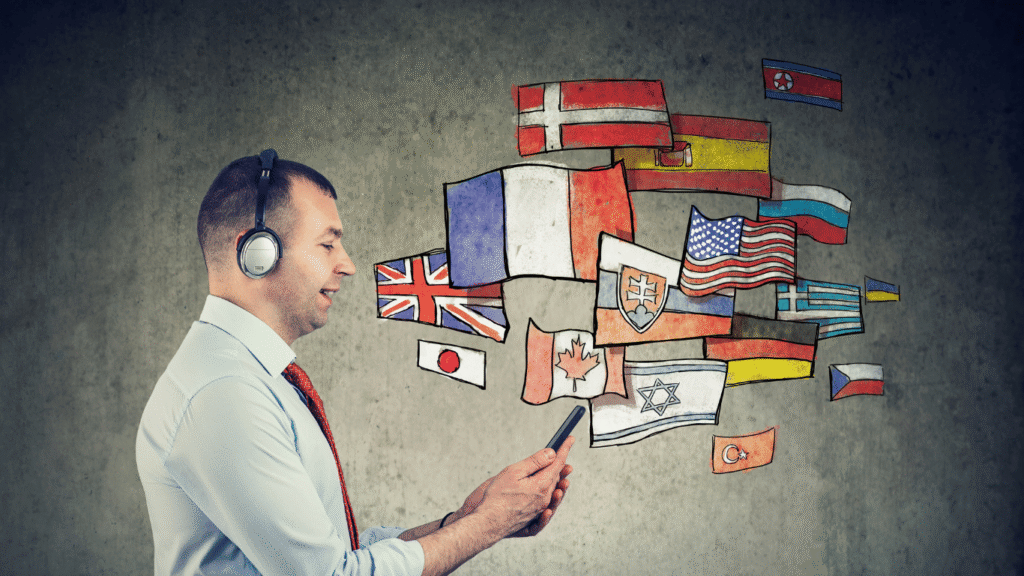
Translation doesn’t necessarily result in understanding. And this is where language errors in AI support become dangerous.
When handling complex issues, AI alone may struggle to interpret nuanced customer needs or cultural context, making human expertise essential for delivering high-quality, empathetic service across multiple languages.
Quality assurance in multilingual programs should measure whether the answer matches the brand and respects the customer’s intent. Additionally, establishing cross-cultural communication guidelines helps ensure effective and respectful communication with a global customer base.
Translation ≠ understanding
AI hallucinations are still a documented issue even in the most robust of models. In one real-world case, a lawyer used a conversational chatbot for legal research. Later, six cited precedents were confirmed to have been fabricated by the AI model. That’s not something you’d want happening in your AI translation processes.
Common risks include:
- Context loss in AI translations
- Incorrect policy explanations
- Subtle tone mismatches
- Overconfident but wrong responses
Literal translation can miss urgency, sarcasm, or cultural nuance.
Brand voice breakdown
AI localization vs translation is a critical distinction. Translation converts words, while localization adapts tone, politeness, and cultural norms.
Without guardrails:
- Japanese replies may sound abrupt
- German responses may sound overly casual
- Spanish apologies may lack warmth
Trust in AI-powered global support collapses when tone feels robotic. Or worse, rude.
High-risk scenarios AI struggles with
Multilingual AI struggles most with:
- Complaints and emotional conversations
- Refunds and billing disputes
- Public-facing responses (social media, reviews)
- High-value or VIP customers
Expert perspective:
There is a critical limitation of AI translation: fluency does not equal judgment. While AI can generate fast, grammatically correct translations at scale, it often misses intent, tone, cultural nuance, and regulatory sensitivity.
Not sure where AI should lead versus assist? LTVplus helps brands design multilingual AI guardrails that protect brand voice and customer trust.
Multilingual AI vs human-led multilingual support
Here’s the reality:
| Area | Multilingual AI | Human Multilingual Agents |
|---|---|---|
| Speed | Instant | Slower |
| Cultural nuance | Limited | Strong |
| Emotional handling | Weak | Strong |
| Cost at scale | Lower | Higher |
| Brand consistency | Risky without guardrails | High |
| Risk exposure | Moderate to high | Lower |
The highest-performing teams don’t choose one over the other, they combine both. This hybrid model leads to enhanced customer satisfaction by leveraging AI for fast, accurate, and multilingual support while human agents provide empathy and cultural understanding.
When multilingual AI works best
Multilingual AI in customer service is powerful when scoped correctly. AI performs well in:
- FAQs and order status
- Shipping and tracking updates
- Account access issues
- Knowledge base search
- First-pass triage
- Multilingual chatbots
These interactions are structured, predictable, and low-risk. A multilingual help center can also provide self-service solutions in multiple languages, empowering customers to find information on their own.
Where humans must lead
Humans should take over when stakes rise:
- Escalations and complaints
- Refunds and billing disputes
- Policy explanations
- VIP or high-LTV customers
- Sensitive public responses
- Complex issues that require human expertise, empathy, or cultural understanding especially when handled by native speakers for high-quality, nuanced support
LTVplus combines AI-assisted workflows with trained multilingual agents to deliver global support that still feels human.
Guardrails for using multilingual AI safely
If you deploy multilingual AI without controls, you’re gambling with brand trust. Here’s how to prevent chaos:
Language confidence thresholds
Not all AI translations are equally reliable. Modern multilingual AI support tools generate confidence scores behind the scenes. Instead of allowing AI to respond to every inquiry automatically, set predefined confidence thresholds.
Best practice:
- High-confidence responses (FAQs, order status): AI can reply instantly
- Medium-confidence responses: AI drafts, human reviews
- Low-confidence responses: Immediate human handoff
This prevents subtle context loss in AI translations from reaching customers unchecked. If you don’t measure translation confidence, you’re just guessing. And guessing in global CX is expensive.
Sentiment-based escalation
AI can detect emotional signals (frustration, urgency, anger) but it shouldn’t attempt to resolve high-emotion situations alone.
When sentiment analysis detects:
- Escalating frustration
- Refund or dispute language
- Negative brand sentiment
- Public complaints
The ticket should automatically route to a trained multilingual agent. Supporting customers from a diverse customer base requires not only multilingual AI but also the involvement of human translators, who can ensure emotional nuance and cultural sensitivity are preserved during escalations.
Why? Because emotional nuance is where AI translation accuracy in customer service breaks down most often. A technically correct translation can still feel cold, dismissive, or robotic.
Brand voice controls
Translation is linguistic. On the other hand, localization is strategic. Without defined tone rules per language, AI may:
- Sound overly formal in one market
- Too casual in another
- Use culturally inappropriate phrasing
- Undermine premium brand positioning
To prevent this, establish:
- Pre-approved tone libraries per language
- Formality guidelines (honorifics, pronoun usage)
- Cultural phrasing standards
- Approved apology and escalation templates
This transforms AI language translation for support from raw output into brand-aligned communication. Multilingual guardrails shouldn’t be seen as AI limiters, but as clear guidelines for how your brand speaks globally.
Ultimately, guardrails ensure automation scales your reach without scaling your risk.
Human-in-the-loop reviews
Now this is the non-negotiable layer. Human review for multilingual AI should be applied in:
- Refunds and billing adjustments
- Policy explanations
- Escalated complaints
- VIP or high-LTV customers
- Public responses (social, reviews)
Even the most advanced systems documented in enterprise AI research still experience hallucinations or contextual inaccuracies.
A human-in-the-loop model ensures:
- Policy accuracy
- Tone alignment
- Cultural appropriateness
- Reduced reputational risk
This is where trust in AI-powered global support is built. Not by removing humans, but by strategically positioning them.
Wrap up: Gamechanger or chaos?
Multilingual AI is a gamechanger, only with guardrails. Without oversight, it risks:
- Mistrust
- Miscommunication
- Churn
LTVplus is a global leader in outsourced customer experience for eCommerce brands. We have experts who specialize in multilingual support tailored to global audiences. LTVplus also delivers flexible, scalable customer support teams that grow with your business.
The LTVplus approach blends:
- AI-powered translation and triage
- Trained multilingual agents
- Brand voice controls
- Human oversight for high-risk tickets
Outcomes that matter:
- Faster response times across regions
- Higher CSAT in non-English markets
- Consistent brand voice worldwide
The future of global customer experience AI isn’t AI alone. It’s AI-powered, human-led support built for scale, empathy, and trust. If you’re looking to outsource customer support without losing quality, schedule a free consultation with us.
FAQs
Is multilingual AI accurate enough for customer support?
Multilingual AI is accurate for structured, low-risk interactions like FAQs and order updates. However, AI translation accuracy in customer service declines in emotional or complex conversations. Human review improves reliability significantly.
Can AI replace multilingual agents completely?
No. AI handles translation and repetitive inquiries well but struggles with emotional nuance, cultural context, and dispute resolution. The safest model combines AI automation with human oversight.
What languages work best with AI support today?
AI performs strongest in widely supported languages like Spanish, French, and German. Long-tail languages may have higher translation variability, increasing the need for human review.
How do you prevent mistranslations from harming CX?
Use multilingual AI guardrails:
- Confidence thresholds
- Sentiment detection
- Brand tone rules
- Human-in-the-loop validation
What’s the safest way to scale multilingual support globally?
The safest approach is a hybrid model that combines AI efficiency with trained multilingual agents. This protects brand voice, reduces risk, and improves trust in AI-powered global support.