


Key takeaways:
- AI agents are becoming a core part of modern customer service operations.
- Some interactions are perfectly suited for automation. Others still require the judgment, empathy, and context that only human agents provide.
- Human agents and AI agents each excel in different customer service scenarios. AI agents deliver the strongest time savings on high-volume, structured tasks like FAQs, order tracking, and password resets. Human agents outperform AI in emotional conversations, complex problem-solving, and high-stakes decisions.
- The most successful CX teams use a hybrid approach. From the perspective of CX operators, the question is no longer AI vs. humans. It’s where each performs best and how to combine them without damaging the customer experience.
AI avatars and automated agents can now resolve customer inquiries in seconds, handling volumes that would overwhelm even the largest human support teams. But speed alone doesn’t define great customer service. The real competitive advantage emerges when CX leaders understand exactly where automation saves time and where human judgment remains irreplaceable.
This guide breaks down the operational time savings of AI agents versus human agents across real support scenarios. You’ll find a clear framework for identifying the break-even point, a practical hybrid model that top-performing teams use, and field-tested lessons for deploying AI without sacrificing customer trust or resolution quality.
The rise of AI agents in customer support operations
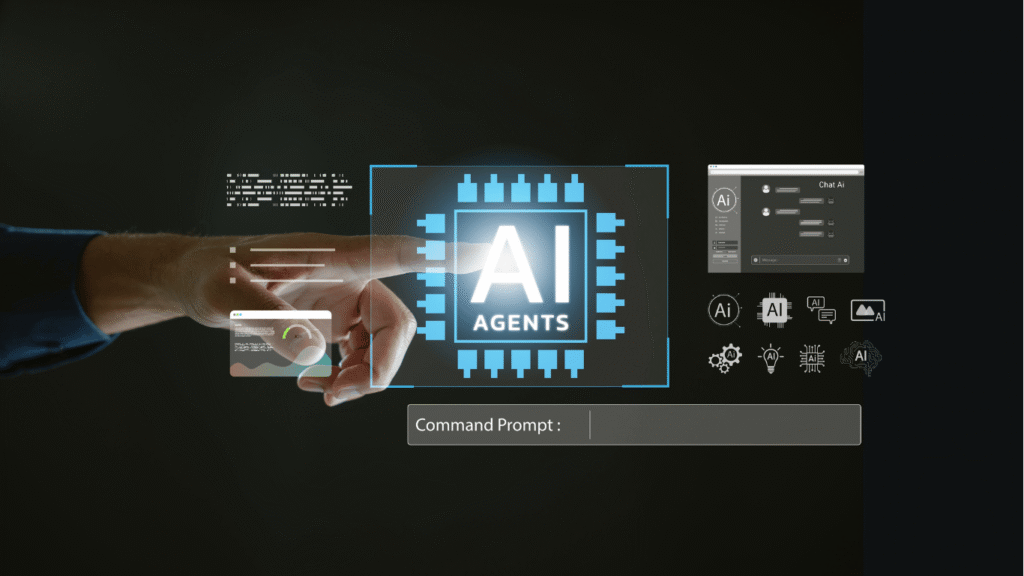
Recent surveys show that 88% of senior executives plan to boost AI-related budgets over the next year. Support is one of the business functions leading that charge, simply because traditional support models simply can’t keep up.
What AI agents are designed to do
Al agents in customer service are designed to handle structured customer interactions at scale. Support teams receive hundreds or even thousands of the same questions every day. If human agents answer each manually, it would definitely consume enormous time and staffing resources.
Think of questions like:
- “Where is my order?”
- “How do I reset my password?”
- “What is your return policy?”
- “How do I update my billing information?”
So, AI agents excel at delivering instant responses. They manage even high-volume tickets that arrive simultaneously. Routine troubleshooting? Self-service automation? Those are other areas for AI systems to shine. When support problems follow a structured diagnostic process, AI can quickly guide customers.
Why companies are deploying AI agents
The short answer: pressure.
Operational pressure. Customer pressure. Cost pressure. But let’s unpack those a little more clearly.
- First, ticket volumes are rising faster than most support teams can scale. Growth is good. But also remember: more customers = more questions, more problems, more tickets.
- Second, there’s this pressure to reduce support costs. Admit it, customer support can be one of the most expensive functions. Salaries, training, management, and infrastructure?
- Third, customers now expect support to be available 24/7. Customers today don’t expect help only when your support team is online. They expect help anytime they need it. This is especially true for companies with global customer bases.
- Fourth, scaling globally also creates operational complexity. When your company starts serving customers in multiple countries, supporting them becomes much harder. Instead of managing one predictable support queue, you now manage multiple regions, multiple time zones, and multiple customer expectations simultaneously.
If your support team is feeling the pressure, outsourcing with a dedicated support team can help you scale. LTVplus is the best partner for scaling customer support without sacrificing quality.
Where AI agents perform extremely well
AI agents perform best in environments with clear inputs, predictable logic, and structured data. These are the scenarios where the AI vs human support performance gap is widest in favor of automation.
Use case #1: High-volume FAQ and order support
Examples include:
- Order-related questions because customers want to know the status of their purchase or how to track it.
- Account access issues that usually involve password resets.
- Shipping updates detailing timelines, shipping fees, or delivery locations.
- Policy lookup to understand rules, procedures, or company policies such as return and refund, warranty coverage, cancellation rules, and subscription terms.
AI avatars resolve these requests in seconds with zero wait time. A human agent handling the same ticket spends 2 to 5 minutes per interaction, including lookup time, typing, and after-contact work. When you multiply that difference across hundreds or thousands of daily tickets, the time savings compound rapidly.
Looking ahead, the potential is even more striking: Gartner predicts that by 2029, agentic AI can autonomously resolve 80% of common customer service issues without any human intervention.
Use case #2: Basic troubleshooting and diagnostic flows
Some support problems follow a very clear path toward resolution. When problems follow a predictable diagnostic tree, AI agents handle them efficiently.
Think of connectivity issues with step-by-step reset instructions, common software errors with documented fixes, or billing questions with clear policy-based answers. The AI follows the decision tree faster than a human agent can read through a knowledge article, and it does so consistently every time.
For example, a product setup problem might require walking a customer through a few sequential steps. These are essentially diagnostic trees.
Use case #3: Simple account actions and 24/7 first response
Subscription changes, contact information updates, and order modifications are transactional. AI agents process these without cognitive overhead. They also serve as the first point of contact outside business hours, dramatically reducing initial wait times and overnight queue backlog.
The operational result across all four categories is clear: AI increases speed, availability, and consistency for routine support. But support operations quickly discover the limits once tickets move beyond structured scenarios.
Examples of early performance wins
Companies deploying AI avatars and automated agents report measurable early results:
- Response times for Tier 1 tickets drop from minutes to seconds.
- FAQ resolution that previously required a human agent now happens instantly through self-service flows.
- Queue backlogs shrink, and agents spend less time on repetitive work.
Forrester research supports this trajectory, projecting that 25% of brands will see a 10% rise in successful simple self-service interactions by end of 2026, cutting individual agents’ daily workloads by about 1 hour. That’s a meaningful operational gain when multiplied across a team of 50 or 100 agents.
But deployment has also revealed a critical lesson: AI excels at scale, yet struggles the moment nuance enters the conversation.
Where human agents consistently outperform AI

Even the most advanced autonomous AI agents struggle in situations that require emotional intelligence, creative problem-solving, or contextual judgment. These are the interactions where AI limitations in customer service become most visible, and where human agents protect brand reputation and customer lifetime value.
Scenario #1: Emotionally charged customer issues
- Some tickets aren’t just questions. They’re also emotional experiences, such as billing disputes, product failures, service outages, and loyalty complaints.
- Yes, AI can generate polite language and pull information from a database. But it can’t genuinely understand frustration, fear, or disappointment. A frustrated customer doesn’t want a scripted response and they want to feel heard.
- When AI misreads the emotional context of a conversation, it risks making the situation worse. A generic “I understand your frustration” response from an AI avatar can feel dismissive when a customer is genuinely angry.
- Human agents outperform AI through real-time empathy, tone recognition, and de-escalation skills that no current AI model replicates reliably.
Scenario #2: Complex multi-system problem solving
Many support tickets involve multiple systems, non-standard workflows, or unusual account histories. Examples include:
- A customer with a payment processing error that spans two platforms
- An expired promotion
- A partial refund
- A customer with unusual account histories and might reference multiple orders, past failed tickets, subscription changes, and a tech glitch all in one message.
These need an agent who can interpret incomplete information, navigate ambiguity, and apply operational judgment in real time.
AI agents trained on standard workflows hit a wall here. They lack the ability to reason across disconnected data sources or make judgment calls when the “right answer” isn’t documented in the knowledge base.
Scenario #3: Retention-sensitive and edge case interactions
Some conversations carry real financial weight, such as:
- Cancellation attempts
- Refund negotiations
- Long-time customer frustrations
These represent the highest-stakes moments in customer service. These interactions directly impact revenue. AI struggles because retention requires persuasion, negotiation, and emotional intelligence, skills that depend on reading the specific customer’s situation rather than following a script.
Edge cases present a similar challenge. AI systems rely on training data, and by definition, edge cases fall outside normal patterns. Policy exceptions, rare product issues, and ambiguous situations require a human agent who can exercise discretion.
AI struggles here. Remember, AI relies on patterns from historical data. So, if the ticket doesn’t match what it has seen before, it fails. And this kind of Al customer support mistake frustrates customers with incorrect guidance.
| Scenario | AI Agent Performance | Human Agent Performance | Recommended Handler |
|---|---|---|---|
| FAQ / Order Status | Excellent (instant resolution) | Good (2–5 min per ticket) | AI Agent |
| Password Reset / Account Updates | Excellent (automated) | Good (manual process) | AI Agent |
| Basic Troubleshooting | Strong (decision-tree based) | Good (knowledge-dependent) | AI Agent |
| Billing Disputes / Escalations | Weak (tone-deaf risk) | Excellent (empathy + de-escalation) | Human Agent |
| Complex Multi-System Issues | Poor (cross-system reasoning gaps) | Excellent (adaptive judgment) | Human Agent |
| Retention / Cancellation Saves | Poor (lacks persuasion) | Excellent (negotiation + EQ) | Human Agent |
| Edge Cases / Policy Exceptions | Poor (training data gaps) | Strong (discretionary judgment) | Human Agent |
The real break-even point between AI and human agents
CX leaders frequently ask: When is AI actually cheaper than humans? The answer is more nuanced than a simple cost-per-ticket comparison. The break-even point for human agents vs AI agents depends on several interconnected factors that many ROI calculators overlook.
5 factors that determine the break-even point
- Ticket complexity. Poor automation, if a ticket is complex, emotionally charged, or requires judgment, create more work than it saves.
- Escalation frequency. AI often hits its limit with complex or ambiguous cases. And every ticket that escalates costs time and money.
- Customer lifetime value. Let’s say AI mishandles a problem for a premium customer. That customer cancels a subscription, leaves a bad review, or tells friends about the experience. The “savings” you gained per ticket vanish in CLV losses.
- Brand risk tolerance. A slightly robotic response may be fine for transactional support. But premium brands? Luxury products? Complex services? Customers notice when AI fails—and it directly impacts trust, perception, and loyalty.
- Resolution quality. AI may reduce response time, but incorrect or incomplete resolutions create repeat tickets, frustration, and lost revenue. Cost savings only matter if customer outcomes stay excellent.
Hidden costs of over-automation
Over-reliance on AI can trigger higher escalations, frustrated customers, lower retention, and reputation damage. If you lean too heavily on AI to handle customer support, without human oversight, things can backfire.
- When AI mishandles a ticket or gives an incomplete answer, the issue often has to be sent to a human agent anyway. So instead of saving time, you end up creating extra work.
- If customers get robotic or incorrect responses, frustration builds faster.
- When customer problems aren’t solved correctly, they’re more likely to leave. A subscription cancellation or a lost repeat buyer costs much more than the small cost savings AI might have delivered.
- Poor automated interactions can be shared publicly (negative reviews, social media complaints, word-of-mouth) which can hurt the brand’s credibility.
The break-even point human agents vs. AI agents happens when automation reduces operational costs without sacrificing resolution quality or customer trust.
The hybrid model that delivers results
The most effective CX teams today don’t choose between AI and humans. They build AI human customer support agent systems where each handles what it does best. This human-in-the-loop approach preserves both speed and customer trust.
In this AI and human hybrid support model, AI handles the operational workload that benefits most from automation:
- Repetitive tasks.
- Ticket classification.
- First responses.
- Knowledge retrieval.
If the problem is simple, the interaction may end there. But when complexity appears, the system escalates the case quickly to a human agent. Human agents handle:
- complex decisions
- emotional interactions
- retention scenarios
- exception handling
How the hybrid workflow operates
Think of it as a tag team, not AI vs. human agents. Here’s how the hybrid workflow looks step by step:
- AI receives the incoming request. The customer submits a ticket, starts a chat, or sends a message. AI immediately picks it up.
- AI classifies and attempts resolution. The system analyzes the request. Is it a simple FAQ, a routine troubleshooting flow, or a basic account update or policy lookup? If yes, AI resolves it instantly using your knowledge base, internal systems, or automated workflows. If not, proceed to Step three.
- Complex cases escalate quickly to humans. Escalation happens fast, often in real time.
- Humans resolve and provide feedback. The human agent takes over, applies judgment, empathy, and operational know-how, and resolves the case.
This hybrid system preserves what customers care about most: speed, accuracy, and trust. And that keeps the customer experience strong.
Implementing a human-in-the-loop support model? LTVplus provides trained customer service agents who work alongside automation tools.
Pro Tip: Design your escalation triggers around customer signals, not just topic classification. A routine order inquiry from a customer with 5 previous escalations in the last month should route to a human immediately. Context-aware routing outperforms keyword-based routing every time.
Field lessons from CX teams deploying AI avatars in support
After working with support operations across industries, several patterns consistently emerge. These lessons reflect what actually happens when AI customer service systems move from pilot to production.
AI accuracy improves dramatically with human oversight. Teams that invest in regular review of AI responses, correction of errors, and retraining cycles see measurably better performance than teams that deploy and walk away. AI agent accuracy vs human accuracy narrows over time, but only with deliberate human-in-the-loop processes.
Fast escalation matters more than AI containment rate. Many teams obsess over the percentage of tickets AI resolves independently. But optimizing for containment often means letting AI struggle with tickets it should escalate. The highest-performing teams prioritize quick, clean handoffs over inflated containment numbers.
High-value customers should rarely be fully automated. When the lifetime value of a customer relationship is significant, the risk of an AI misstep outweighs the cost savings of automation. Route these customers to skilled human agents by default, using AI only for data retrieval and context preparation behind the scenes.
AI should assist agents, not replace them. The strongest deployments use AI as a copilot. Real-time knowledge retrieval, response suggestions, sentiment analysis, and automated after-contact work make human agents faster and more effective without removing the human element from the customer experience.
The best AI deployments start narrow. Teams that launch AI across every channel and ticket type simultaneously create operational chaos. Successful implementations begin with one clearly defined use case, prove the value, refine the model, and expand gradually.
What the future of AI + human support looks like
After all the hype, predictions, and headlines about AI vs. human support performance, most CX arrive at the same realization: Customer service isn’t becoming fully autonomous. What’s actually emerging instead is AI-augmented support teams.
So what does the future of AI in customer support look like?
- AI is becoming an agent copilot that can instantly analyze and surface the most relevant information before the agent even begins responding.
- AI improves real-time knowledge retrieval instead of digging through documentation or searching the help center.
- AI generates response suggestions—intelligent drafts based on the conversation context.
- AI automates many operational workflows behind the scenes.
And as AI handles these tasks, human agents will focus on complex problem-solving, retention, relationship management, and trust-critical interactions. Companies that succeed with AI agents in customer service design their support system so that each side [automation + human expertise] does what it’s best at.
Build the hybrid support model with the right AI-human mix
AI agents have already changed the economics of customer support by answering questions instantly, absorbing huge volumes of repetitive tickets, and making 24/7 support possible. But real-world experience shows that AI alone can’t deliver great customer service.
The field lessons from teams deploying AI are clear: the best support operations aren’t choosing between AI agents vs human agents. Automation handles the scale, humans handle the nuance. Great customer support needs both.
If you’re rethinking how your support organization should scale, LTVplus combines automation with dedicated human support teams to deliver faster responses, better resolution quality, and customer experiences that still feel human.
Talk to LTVplus about building your hybrid support team and discover how the right balance of AI and human expertise drives measurable CX results.
FAQ
Are AI agents better than human agents in customer service?
AI agents are faster for repetitive tasks, but human agents perform better in complex or emotional interactions.
When should AI escalate to human support?
AI should escalate when emotions, financial decisions, or complex troubleshooting are involved.
What is the break-even point between AI and human support?
The break-even point usually occurs when ticket volume becomes high enough that automation significantly reduces operational costs.
Can AI replace human agents completely?
Most experts agree that AI will augment human agents rather than replace them entirely.
What is a human-in-the-loop customer service model?
It’s a hybrid approach where AI handles routine tasks and human agents supervise complex or sensitive interactions.