
9 Guardrails for Emotional AI Detection in Autonomous Agents in CS
 Regina Ongkiko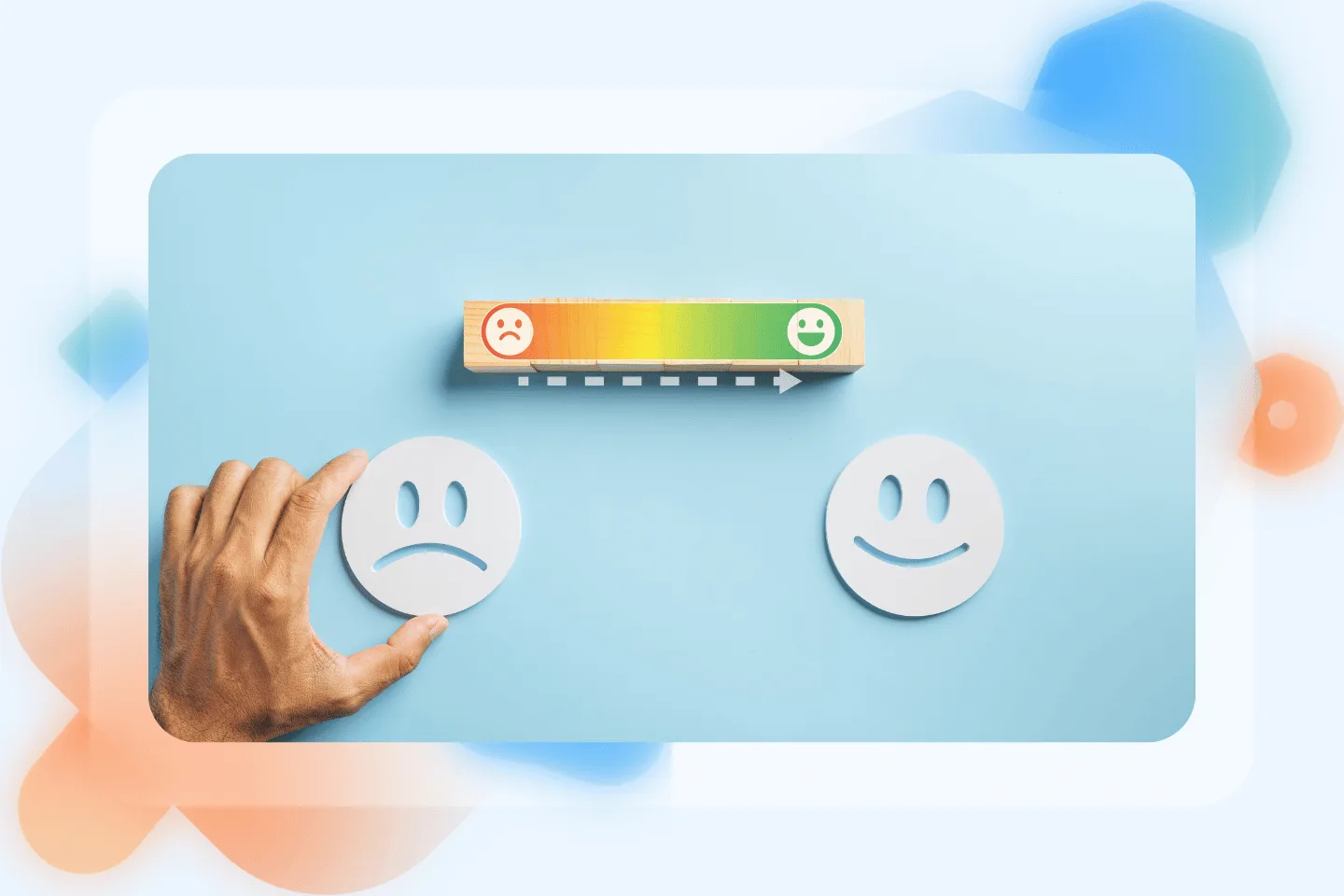
In a nutshell:
Autonomous AI agents can scale customer service, but without safeguards they can damage loyalty, revenue, and brand trust. To deploy AI safely, CX teams must implement these nine guardrails:
- Emotional sensitivity
- Context threshold
- Financial risk
- Policy interpretation
- Escalation speed
- Brand voice
- Loyalty protection
- Channel appropriateness
- Continuous learning
Let’s walk through how each guardrail works and how to apply them in real-world customer service operations.
Why are guardrails essential for autonomous AI agents?
- Autonomy without oversight isn’t innovation. It’s a risk at scale. It’s true that AI can move fast. But customer trust moves slower. Guardrails ensure the two don’t collide.
- While technology enables automation and rapid decision-making, it also introduces risks such as bias and over-reliance which require careful design and understanding within the organization.
- Artificial intelligence in customer service works by bringing together data-driven insights, real-time adaptation, and contextual understanding to interpret customer interactions and provide relevant, timely support.
- Effective AI escalation rules are essential for preserving customer satisfaction and operational efficiency in customer service. The real challenge lies in designing escalation workflows that balance the benefits of automation with the need for human intervention when interactions become complex or require empathy.
Balancing efficiency with customer experience
Autonomous AI agents increase speed, reduce backlog, and enable 24/7 responsiveness. AI in customer operations can significantly improve productivity, but only when governance is structured.
Without emotional AI detection or sentiment-based escalation, automation can misread urgency or frustration.
Here’s how guardrails help with balancing efficiency with CX:
- AI can help reduce customer wait times by quickly identifying when escalation is needed, so customers aren’t left waiting for clarifications or appropriate responses.
- The system’s task is to accurately classify and respond to customer needs. Effective escalation should then be driven by defined triggers that consider escalation signals such as customer intent, tone, account health, complexity, and operational risks. It is important to define escalation metrics and triggers clearly to ensure consistent and effective escalation decisions. That impacts retention, CSAT, first-contact resolution, and customer lifetime value (LTV).
Crucial reminder: Efficiency should never erode empathy in customer support.
Avoiding operational, financial, and reputational risks
AI refund limits without financial controls for AI can quietly drain revenue. Poor AI policy enforcement can violate compliance rules. A delayed escalation can go viral on social media. Generative AI errors often stem from overconfidence in automation without structured oversight.
Autonomous AI doesn’t fail loudly. It fails repeatedly unless you build guardrails.
Not sure how to integrate AI without increasing risk? LTVplus is a global leader in outsourced customer experience for eCommerce brands. LTVplus helps businesses increase customer lifetime value through dedicated, fully managed support teams. Book a strategy call to design a safe hybrid AI model.
The 9 guardrails for autonomous AI agents

Clear boundaries between AI autonomy and human judgment are essential for effective decision making in customer service. These guardrails not only prevent errors but also help AI lead human operators to better outcomes in complex scenarios.
Each guardrail below defines a boundary where AI autonomy stops and human judgment begins.
1. Emotional sensitivity guardrail
Rule: AI must defer to humans when strong emotions are detected. Empathy in customer support can’t be fully automated, especially in high-stakes cases.
Customer sentiment is a powerful trigger for AI escalation and should be monitored closely. Emotional AI detection and sentiment-based escalation prevent tone-deaf automation.
So if a customer shows anger, urgency, or distress, the system should trigger fast human handoff. AI systems must be able to respond appropriately to emotional cues to ensure effective escalation.
For example: voice analysis tools in call centers can detect customer frustration, enabling more empathetic support from agents.
Implementation:
- Sentiment scoring thresholds
- Automatic escalation when negative sentiment spikes
- Flagging repeated frustration phrases
2. Context threshold guardrail
Rule: AI acts only when customer context intelligence meets minimum standards.
Context-aware AI requires:
- Full order history
- Account verification
- Prior interaction visibility
Incomplete context leads to confident but wrong answers. That’s expensive. AI decision-making should be based only on relevant data to ensure responses and customer routing are accurate and effective. If required data fields are missing, AI decision confidence drops and autonomy pauses.
3. Financial risk guardrail
Rule: Monetary decisions beyond AI refund limits require human approval.
Financial controls for AI should include:
- Refund caps
- Credit thresholds
- Upgrade authorization limits
- Risk-based automation scoring
Aligning financial controls with business operations is essential for effective risk management. Effective escalation rules are designed to ensure that AI can hand off to human agents at the right moment, preserving customer satisfaction.
Small refunds? AI can handle them. Large credits for high-value customers? Human review protects revenue.
4. Policy interpretation guardrail
Rule: AI enforces policies but doesn’t interpret gray areas.
AI policy enforcement must operate within strict AI compliance boundaries. Edge cases require exception handling in CX by trained agents. Such cases include:
- Subscription disputes
- Warranty exceptions
- Unusual promotions
5. Escalation speed guardrail
Rule: AI must escalate when resolution stalls.
Preventing support loops is critical. AI escalation rules should trigger when:
- The same issue repeats
- SLA thresholds approach
- Resolution confidence declines
These situations are known as escalation triggers, which prompt the AI to escalate the case to a human agent or higher support level. AI agents can enhance customer service by autonomously managing escalations based on predefined triggers.
6. Brand voice guardrail
Rule: AI can’t deviate from brand tone or messaging. Automation must sound like your brand, not a beta test.
Brand-safe AI includes:
- AI tone control frameworks
- Approved response templates
- Consistent CX messaging validation
- Support for multiple languages to maintain brand consistency across regions
The AI assistant adapts its responses based on the customer’s specific product, region, and language. Tone errors can feel minor internally but externally, they shape perception.
7. Loyalty protection guardrail
Rule: High-value customer protection overrides automation.
AI churn detection systems should flag:
- VIP customers
- Long-term subscribers
- Repeat purchasers
- Accounts with declining engagement
Customer data is essential for identifying and protecting high-value customers, as it consolidates profiles, purchase history, and support interactions to enable accurate detection and personalized engagement. AI should be integrated with first-party data to ensure that it delivers accurate and relevant responses to customers.
Loyalty-first CX means humans handle customers who matter most to lifetime revenue.
8. Channel appropriateness guardrail
Rule: Autonomy adjusts by channel risk.
Omnichannel AI governance requires channel-aware support logic. Public vs private CX handling differs in the following ways:
- Social media = higher reputational risk
- Email = moderate risk
- In-app chat = controlled environment
9. Continuous learning guardrail
Rule: AI feedback loops must drive structured improvement. Autonomy is never “set it and forget it.”
Continuous CX improvement requires:
- Monthly audit of AI decisions
- Escalation analysis
- Error categorization
- AI learning governance tracking
- Use of tools and platforms to support ongoing AI learning, auditing, and governance
Trustworthy AI depends on ongoing review and governance, not one-time configuration.
AI control spectrum in customer support
Different AI systems offer varying levels of autonomy and oversight, impacting how businesses manage customer interactions. The difference between fully autonomous, AI-assisted, and hybrid models lies in their approach to decision-making, risk management, and human involvement. Context-aware AI leads to consistent answers across teams by ensuring everyone is working from the same definitions and logic.
| Capability | Fully Autonomous AI | AI-assisted (Human-led) | Hybrid (Human-in-the-Loop) |
|---|---|---|---|
| Decision authority | AI makes final decisions | Human makes decisions | Shared decision model |
| Financial risk exposure | High without strict limits | Low | Controlled by thresholds |
| Emotional escalation | Sentiment-triggered only | Human-detected | AI detects, human resolves |
| Policy interpretation | Rule-based only | Human interpretation | AI applies, human reviews edge cases |
| Escalation speed | Automated triggers | Manual | Automated + monitored |
| Brand protection | Template-based | Human voice | Guardrail + human oversight |
| Best for | High-volume, low-risk tickets | Complex, high-risk cases | Scalable, risk-balanced CX |
Best practices for implementing AI guardrails
AI governance doesn’t need to be heavy. It needs to be intentional.
Providing access to the right features and a comprehensive knowledge base is essential for effective AI deployment and support.
When implementing AI guardrails, it’s important to focus on key outcomes to ensure efficiency and clarity in customer support processes. Effective human-AI collaboration requires understanding the limitations of AI and designing workflows that empower both AI and human agents.
Monitor KPIs and customer feedback
Track:
- CSAT
- First-contact resolution
- Escalation rate
- Sentiment shifts
- Refund variance
Analyzing patterns in customer feedback can reveal recurring issues, helping teams address root causes more effectively. Real-time feedback on customer frustration levels can guide call center agents to improve interactions.
LTVplus consistently delivers higher CSAT scores and faster response times by aligning AI performance with measurable CX outcomes.
Need help measuring AI impact? LTVplus can help your team implement structured monitoring and guardrail optimization.
Combine human + AI hybrid workflows
Hybrid systems allow:
- AI to resolve high-volume, low-risk inquiries efficiently
- Humans to manage exception handling in CX and edge cases, ensuring that issues are routed to the right person for effective resolution
- Risk-based automation for refunds and financial decisions
- Loyalty-first routing for high-value customer protection
- Fast human handoff to a live agent when emotional AI detection triggers escalation; a seamless handoff to a live agent is essential for complex cases, with AI providing prepared summaries and context to improve resolution speed and customer experience
- AI agents can manage customer service escalations autonomously by interpreting signals and assessing customer sentiment
Effectively managing the conversation between AI and human agents ensures a seamless customer experience. Proper escalation mechanisms deliver real value by enhancing customer satisfaction and brand reputation.
Regularly audit AI decisions
Monthly reviews should evaluate:
- Escalation accuracy
- Refund threshold adherence
- Policy compliance
- Customer churn indicators
Consistency in auditing AI decisions is crucial to ensure uniform guidance and reliable decision-making across all channels and regions. Continuous oversight prevents silent damage.
Protect your brand with these guardrails
Autonomous AI agents increase speed and scale but unmanaged autonomy increases risk.
These nine guardrails protect:
- Revenue
- Brand trust
- Customer loyalty
- Operational stability
Safe AI deployment requires emotional sensitivity, financial controls, escalation rules, and continuous learning governance.
LTVplus is a global leader in outsourced customer experience for eCommerce brands. We help businesses increase customer lifetime value through dedicated, fully managed support teams and build fully managed CX teams that combine AI efficiency with human judgment to protect revenue and loyalty.
If you’re looking to scale support with AI without sacrificing quality, schedule a free consultation with us.
FAQs
What are autonomous AI agents in customer service?
Autonomous AI agents are systems that independently resolve customer inquiries, process actions like refunds, and enforce policies without real-time human intervention.
Why do AI agents need guardrails?
Guardrails prevent financial errors, tone misalignment, compliance violations, and churn. This ensures that AI is supporting customer experience rather than harming it. In recent years, the use of emotional AI has raised questions about fairness, accuracy, and ethical implications.
How do guardrails protect high-value customers?
Guardrails route VIP and high-LTV customers to human agents, preventing automation errors that could damage long-term revenue relationships. Context decides when escalation is necessary, ensuring relevant and accurate responses.
Can AI handle all customer interactions without human oversight?
No. High-risk, emotional, financial, or complex cases require human review to protect loyalty and compliance. Humans often rely on AI outputs, but overreliance can lead to false alarms or misclassifications.
What KPIs should I track to measure safe AI adoption?
Monitor CSAT, escalation rate, resolution time, refund variance, sentiment shifts, and churn indicators to evaluate AI performance safely. Tracking for false alarms is important to ensure detection accuracy.
How does emotional AI detection work?
Emotional AI detection works by analyzing multiple data sources to recognize emotional states. It uses facial expression analysis, voice analysis (such as tone and inflection), and physiological data like heart rate variability, skin conductance, and brainwave patterns. Text and sentiment analysis allow AI to assess emotional intent by analyzing word choice and syntax. Generative AI can talk about emotions by summarizing or explaining detected cues, but it does not feel emotions itself. Rather, it recognizes patterns correlated with feelings. Context decides which emotional cues are relevant for accurate interpretation.
Related Posts

How to Use MSP AI and Automation to Handle Tier 1 Tickets Faster in Your MSP
Learn how MSP AI automation streamlines Tier 1 support, auto-triages tickets, reduces backlog, and improves SLA performance with clear workf

Top 3 MSP PSA Tools & RMM Tools for Your Tech Stack: ConnectWise, Datto, and Kaseya
Discover how MSP PSA tools work with RMM to streamline ticketing, billing, and SLAs. Learn to select platforms, align workflows, and train t

The Smart Handoff: When Should AI Escalate to Human Negotiators (Without Frustrating Customers)?
When should AI escalate to human negotiators? Get practical insights to enhance your negotiation strategies. Read the article now.

What is Human In The Loop Customer Support?
Key takeaways: The concept sounds straightforward, but execution matters. Getting the balance wrong means frustrated customers, wasted resou