
Remote Work Security: 5 Best Practices for Protecting Your Distributed Team
 Regina Ongkiko
The safety of your remote team is non-negotiable. To protect your distributed team from various threats, here are five best practices you must implement:
- Enforce strong authentication
- Implement role-based access and least privilege
- Encrypt all communications and files
- Train employees in cybersecurity awareness
- Establish clear remote security policies
Distributed teams have now become the standard for many global organizations. While remote work unlocks benefits such as flexibility, access to global talent, and cost efficiencies, it also exposes businesses to heightened cybersecurity risks. With employees connecting from various locations and devices, remote work security is no longer optional—it’s a critical must-have.
Let’s explore the top security risks for distributed teams, the best practices to mitigate them, and the secure remote work solutions every business must consider.
What are the common security risks for distributed teams?
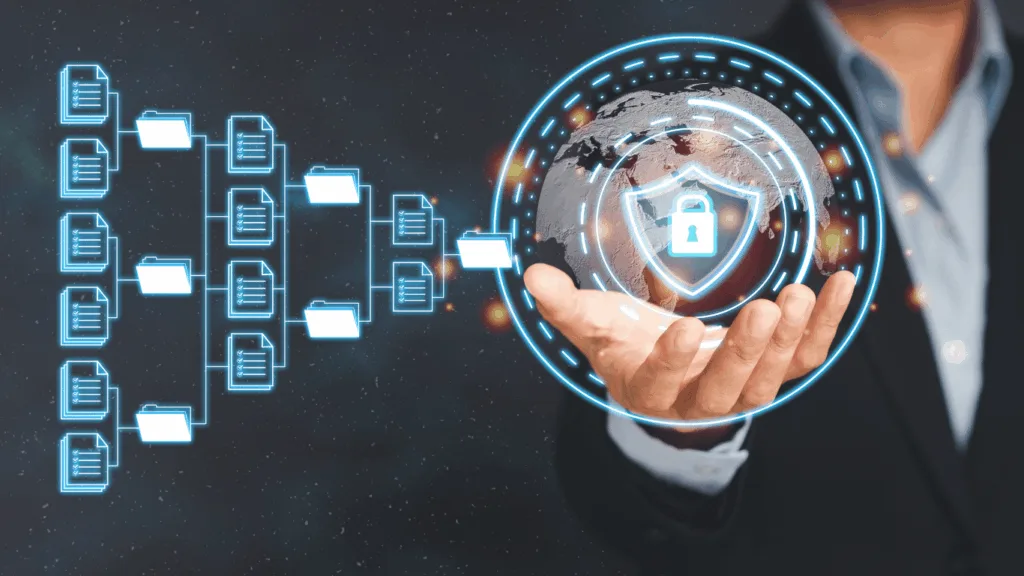
Distributed teams face a unique set of risks that, if left unaddressed, can increase the overall security risk, potentially compromising sensitive data and overall business continuity. These are:
Unsecured Wi-Fi networks and public connections
Remote employees often work from home, co-working spaces, home networks, or cafés. Unsecured wi-fi networks, such as public wi fi networks, can leave sensitive data exposed to interception. After all, public networks remain one of the weakest links in cybersecurity for remote teams.
Phishing and social engineering attacks
Phishing attacks and emails, along with fake login pages, exploit human error. These are common security threats, with phishing being one of the most widespread tactics.
With remote teams relying heavily on digital communication, attackers have more opportunities to trick employees into revealing credentials and gain unauthorized access to systems and data.
Weak or reused passwords across tools
Using the same or weak passwords or reusing login credentials across multiple platforms increases the likelihood of a breach.
Credential stuffing (a hacking technique in which attackers use a database of compromised user credentials to infiltrate a system) remains a growing threat in distributed workforces, as it can allow unauthorized parties to access company resources.
Device theft or loss without proper safeguards
It already goes without saying that laptops, smartphones, tablets, and any mobile device are essential for remote work… which makes them primary sources for sensitive information.
It is crucial to implement measures to protect devices from theft or loss, such as enabling encryption and remote wipe capabilities. If such devices are stolen or lost without these protections, sensitive company data can fall into the wrong hands.
Compliance risks in handling sensitive data
From GDPR to HIPAA, companies handling personal or regulated data must ensure compliance with data privacy regulations.
Failing to secure remote environments can result in legal penalties and reputational damage. Protecting sensitive business information is essential to maintain compliance and avoid regulatory risks. It must be emphasized that compliance is now intertwined with enterprise resilience.
Best practices for securing remote work
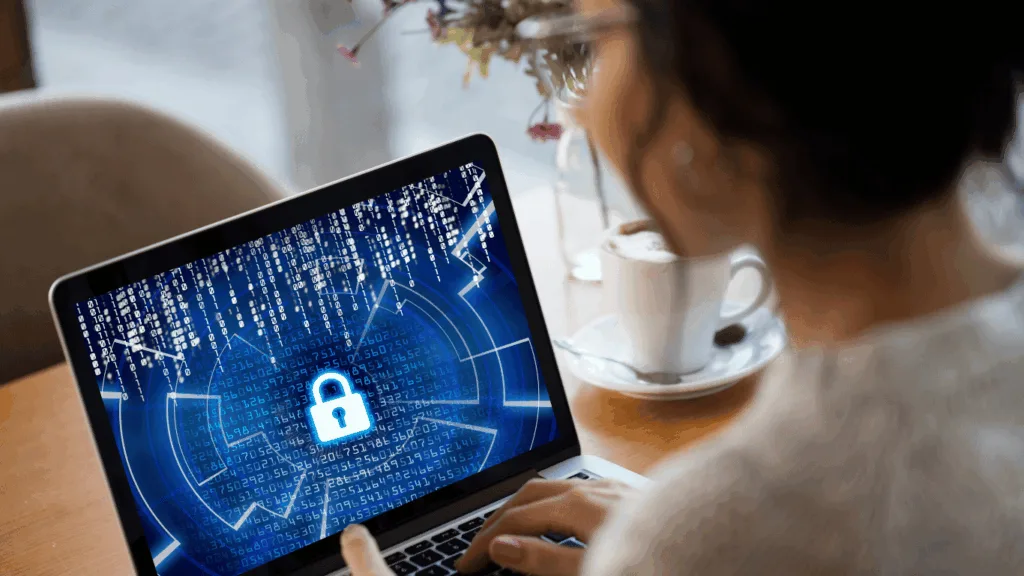
1. Enforce strong authentication (MFA, SSO)
- Passwords alone aren’t enough to protect sensitive data (no matter how many special characters you put in them). Enforcing multi-factor authentication (multi factor authentication mfa) (MFA) ensures that even if a password is stolen, attackers can’t access accounts without the secondary verification step, such as a text code or authenticator app.
- On the other hand, single sign-on (SSO) simplifies the login process while maintaining security, giving employees one secure entry point for multiple tools. This combination minimizes friction for staff while maximizing protection against unauthorized access.
2. Implement role-based access and least privilege
- Overexposure of data often happens when employees have more access than they need to. Role-based access control (RBAC) ensures that individuals only access the applications, files, and systems necessary for their role.
- Applying the principle of least privilege means reducing permissions to the bare minimum, which limits damage if an account is compromised. Regular reviews of permissions help prevent ”permissions creep,” where employees accumulate unnecessary access over time.
3. Encrypt all communications and files
- Encryption acts as a digital lock on sensitive information, rendering it unreadable to unauthorized parties. All communications—including emails, instant messages, and video calls—should use end-to-end encryption and data encryption to safeguard data in transit.
- Files stored in the cloud or transferred between devices must also be encrypted to protect against interception. This level of protection is especially critical for industries handling confidential client or financial data, such as critical data.
4. Train employees in cybersecurity awareness
- Employees are often the first line of defense against cyber threats, and security awareness is a key component of employee preparedness.
- Employee training sessions equip them to recognize suspicious emails, avoid unsafe downloads, and follow secure practices when working remotely.
- Training should go beyond a one-time workshop and be reinforced with regular security training, ongoing reminders, phishing simulations, and updated content that reflects the latest threat landscape.
5. Establish clear remote security policies
Without clear guidelines and without efforts to enforce security policies to ensure compliance, employees may adopt risky habits, such as saving sensitive files to personal devices or using unauthorized apps. A well-defined security policy eliminates ambiguity by setting rules for:
- Device use
- Software installation
- Password management
- Incident reporting
- Reporting security incidents
Policies must also cover how to handle lost or stolen devices and how employees can securely connect to public wi-fi. Consistency in enforcement ensures all team members align with company standards. Additionally, having an incident response plan as part of the security policy is essential for quick detection and effective handling of security incidents.
Tools and solutions for cybersecurity in remote teams
Implementing best practices often requires the right technology to support them. From access management to real-time monitoring, modern secure remote work solutions provide the necessary infrastructure to protect distributed teams and keep operations running smoothly.
VPNs and Zero Trust Network Access (ZTNA)
- Traditional VPNs encrypt internet traffic, creating a secure connection for employees working from any location and providing secure access to the corporate network and company networks.
- However, as cyberattacks have grown more sophisticated, organizations are moving toward Zero Trust Network Access. ZTNA assumes no device or user should be trusted by default, requiring continuous verification for each access attempt and ensuring secure access to corporate resources. This approach not only strengthens security but also reduces reliance on traditional perimeter defenses that are less effective in protecting corporate networks in distributed work environments.
Endpoint detection and response (EDR) tools
- Endpoints (such as laptops, mobile devices, and tablets) are frequent targets for cybercriminals. EDR solutions provide real-time visibility into endpoint activity, automatically detecting unusual behavior and triggering rapid response actions, such as isolating compromised devices.
- This ensures that threats are contained quickly before they can spread across the network. For distributed teams, EDR is crucial in maintaining deceive-level protection across diverse environments.
Secure file-sharing and collaboration platforms
Collaboration is at the heart of remote work, but traditional file-sharing methods can create vulnerabilities.
- Secure platforms provide encrypted storage, version control, and restricted access options to prevent unauthorized data sharing.
- Tools like enterprise-grade cloud storage and secure messaging apps ensure that employees can collaborate without sacrificing security.
Integrating these solutions into workflows also minimizes shadow IT, where staff rely on unauthorized apps that may not meet security standards.
Password managers and Identity Access Management (IAM)
- Strong identity management is a cornerstone of cybersecurity for remote teams. Password managers help employees generate and store strong, unique passwords, reducing the likelihood of breaches caused by weak credentials.
- Coupled with Identity Access Management systems, businesses gain centralized control over authentication and access privileges. IAM platforms often include features such as adaptive authentication and automated de-provisioning, ensuring that only the right users have access at the right time.
Monitoring and reporting tools for compliance
For businesses bound by strict regulatory requirements, compliance can’t be left to chance. Monitoring and reporting solutions track user activity, flag anomalies, and generate audit-ready reports that demonstrate adherence to frameworks like GDPR, HIPAA, or ISO standards.
Some widely used monitoring and reporting tools for compliance include:
- Splunk: A platform for searching, monitoring, and analyzing machine-generated data.
- LogRhythm: A security information and event management (SIEM) tool designed for compliance and threat detection.
- Microsoft Defender for Cloud: Integrates monitoring and reporting to help organizations maintain compliance across cloud workloads.
- Qualys Compliance Suite: Provides automated compliance reporting and continuous monitoring of IT systems.
- Tenable.sc (formerly SecurityCenter): Focuses on vulnerability management and compliance auditing.
These tools not only reduce compliance risks but also provide holistic transparency into system health. Overall, companies can respond swiftly before problems escalate into breaches by proactively identifying potential issues.
Secure teams mean a secure company
As businesses scale their distributed operations, they must recognize that security is a continuous journey. Overall, organizations can transform potential vulnerabilities into a culture of resilience by anticipating risks, adopting the best practices, and investing in the right technologies.
Aside from technology, securing a distributed workforce also requires a proactive culture of vigilance. Companies can safeguard data, maintain compliance, and protect client trust by combining remote work best practices with advanced cybersecurity for remote teams.
Looking for a remote work security partner? We’re officially ISO 27001:2022 certified for information security management systems! LTVplus builds remote teams that seamlessly integrate with your company. So partner with LTVplus and start implementing smarter security for a safer digital work environment.
Related Posts

How to Build an Internal MSP Security Operations Function
Learn how to build MSP security operations without a full SOC. Discover roles, tools, costs, and a step-by-step roadmap to add profitable se
Top 3 MSP PSA Tools & RMM Tools for Your Tech Stack: ConnectWise, Datto, and Kaseya
Discover how MSP PSA tools work with RMM to streamline ticketing, billing, and SLAs. Learn to select platforms, align workflows, and train t

How to Onboard an MSP Remote Team in 30 Days
Onboard an MSP remote team in 30 days with a week-by-week framework. Learn how to align tools, SOPs, SLAs, and QA so remote engineers reach

Multilingual AI in Customer Service: Gamechanger or Chaos?
Discover how multilingual AI in customer service can elevate customer experiences by bridging language gaps and enhancing satisfaction. Read