
Live Chat vs Chatbots: Optimizing Customer Conversations
 Regina Ongkiko
In 2025, customer expectations for instant and seamless support have never been higher. According to a recent Zendesk report, 72% of customers expect immediate, real-time assistance when engaging with a brand. Instant responses are now crucial for meeting these expectations—as customers increasingly demand quick answers to their inquiries. This surge in demand has placed a spotlight on digital service channels, especially the ongoing debate of live chat vs. chatbots.
While chatbots offer unmatched speed and scalability, live chat agents bring empathy and nuanced problem-solving to complex issues. Live chat agents excel in providing the value of human interactions, delivering personalized and empathetic support that builds stronger customer relationships. Both tools are now widely used to drive customer engagement by fostering proactive and real-time communication with customers.
Striking the right balance between automation and human interaction is no longer optional—it’s a strategic must. Businesses that fail to adapt risk falling behind, while those that embrace a hybrid support model are better positioned to meet evolving customer needs and enhance overall chatbot effectiveness.
Live chat vs. chatbots: A practical comparison
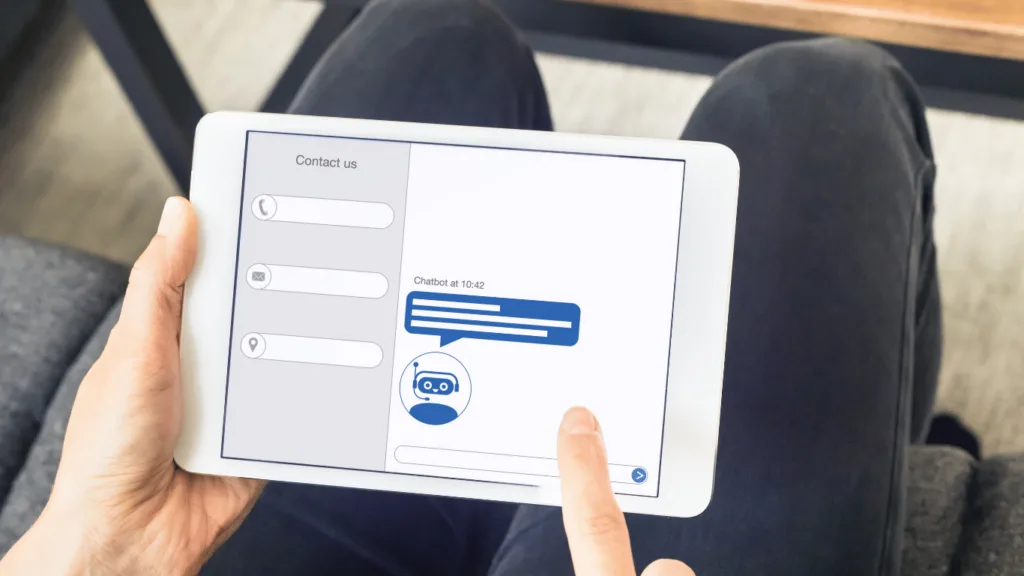
Choosing between live chat vs. chatbots isn’t a matter of picking one over the other; it’s about understanding the key differences in how each handles customer interaction, such as live chat offering real-time human support while chatbots provide automated responses. Each has unique strengths and limitations, and they can also complement one another. Here’s a breakdown:
Live chat
| Strengths | Limitations |
| Human empathy and emotional intelligence Ability to handle complex or sensitive inquiries Personalized service tailored to unique customer contexts Stronger support for sales conversations and upselling Real-time problem-solving with flexible decision-making Support agents and customer service agents deliver live chat, providing personalized, empathetic assistance and understanding human emotions. Live chat messaging enables real-time, personalized communication between businesses and customers. A live chat widget offers easy access to support and can be integrated with automation features for 24/7 engagement. The customer support team manages live chat interactions, ensuring high-quality service across channels. | Limited to business hours or agent availability Slower response times during peak demand Higher operational costs due to staffing requirements Scalability challenges with growing support volume |
Chatbots
| Strengths | Limitations |
| Built on advanced chatbot technology for automation and 24/7 supportInstant, 24/7 availability Instant responses to customer inquiries Efficient handling of high volume, repetitive inquiries Cost-effective and scalable Fast access to order statuses, FAQs and account details Consistent and rule-based responses | Lack of emotional understanding and context awarenessInability to resolve complex, nuanced, or sensitive issues Risk of customer frustration if escalation is delayed or unavailable Limited capability for upselling or closing sales |
When is live chat necessary?
Live chat works best in scenarios that are complex, require emotional intelligence and focus on sales-related inquiries.
Example: A customer contacts a premium travel agency to update a honeymoon booking due to a family emergency. The issue involves cancellations, partial refunds, and emotional distress.
In this situation, a live chat agent is essential. Not only to navigate the complexity of the request but also to provide empathy and reassurance in such a personal dilemma. Human agents are especially valuable here, as they can offer personalized and understanding support that automated systems cannot, particularly when handling sensitive or nuanced issues. The human touch directly impacts customer satisfaction and brand loyalty.
When are chatbots ideal?
Chatbots work best in scenarios that need quick answers, face high-volume inquiries, and demand 24/7 availability. Chatbots are also ideal for businesses that cater to a large volume of customers all over the world as there might be a need for multilingual support.
Example: A customer visits an eCommerce website late at night to ask about order tracking, return policies, or shipping times.
In this situation, a chatbot can provide an immediate response and automatically answer questions from customers, ensuring a smooth experience without waiting for human support. This is where chatbot effectiveness shines: handling high-volume, low complexity requests efficiently and around the clock.
How to design a hybrid strategy to get the best of both solutions

When it comes to live chat vs. chatbots, the most effective customer service models don’t rely on one or the other, they blend both through a well-planned hybrid support model. This approach leverages the scalability of automation while retaining the depth and empathy of human interaction.
A dedicated customer support team plays a crucial role in managing multiple communication channels, such as live chat, messaging, and SMS, ensuring high-quality service and personalized assistance. The key to success lies in smart segmentation and seamless collaboration between bots and agents.
Segment queries by complexity or value
Not all customer inquiries are created equal. Low-effort, high-frequency questions (like tracking orders or resetting passwords) are prime candidates for chatbots. These queries benefit from speed, consistency, and 24/7 support. Conversely, emotionally charged issues, complex queries requiring nuanced understanding, complex troubleshooting, or high-value sales inquiries should be flagged for live agents.
Using machine learning and intent recognition, companies can intelligently route queries based on:
- Issue complexity
- Emotional language or sentiment detection
- Customer history and account status
- Business impact or revenue potential
This segmentation enhances chatbot effectiveness while ensuring that high-value interactions receive the human attention they deserve.
Structure bot-to-agent handoffs with minimal friction
A poorly executed bot-to-agent handoff can turn a helpful interaction into a frustrating one. To ensure smooth transitions:
- Bots should recognize escalation triggers early (repeated failed attempts, customer frustration).
- Handoffs must be immediate and visible to the customer (“Let me connect you to a live support agent.”)
- Provide context upfront to the support agents so they are fully equipped to assist, ensuring the customer doesn’t need to repeat themselves.
A well-structured handoff builds trust and prevents drop-offs in customer satisfaction, two critical factors in evaluating live chat vs. chatbots.
Maintain context across handovers
Context continuity is essential for a seamless customer experience. When moving from bot to human agent:
- The conversation history should carry over intact.
- Customer details, prior questions, and chatbot responses should be visible to the agent.
- Support tickets should be used to track and manage customer interactions, ensuring all relevant information is organized and accessible during handovers.
- The tone of the conversation should remain consistent to reduce friction.
Failing to maintain context not only wastes time but erodes trust. In contrast, a unified experience within a hybrid support model reinforces reliability and professionalism.
Evaluating costs and ROI when it comes to implementing live chat vs chatbots

When considering live chat vs. chatbots, cost is often a driving factor. Live chat solutions are a key component in evaluating the cost and ROI of customer support strategies, as they enable real-time conversations with human agents and can significantly impact customer engagement. While live agents provide personalized service, they come with higher staffing costs. Chatbots, on the other hand, offer impressive scalability and efficiency, if deployed thoughtfully. Understanding both the financial and experiential tradeoffs is essential for designing a sustainable hybrid support model.
Cost differences: Live agents vs. chatbot platforms
Live chat agents:
- Require hourly wages, benefits, and ongoing training for customer service agents
- More expensive to scale during peak demand periods due to increased need for customer service agents
- Average cost per live chat interaction: $6 – $8
Chatbots:
- One-time development cost plus licensing or hosting fees
- Operate 24/7 without additional labor costs, handling up to 80% of routine inquiries
- Average cost per chatbot interaction: $1 or less
Operational efficiency and handle time
Chatbots significantly reduce average handle time (AHT) by instantly resolving repetitive inquiries through automated responses. Companies using AI-powered chatbots report:
Customer satisfaction tradeoffs
Despite their efficiency, over-reliance on chatbots (or poorly configured ones) can backfire. Common issues include:
- Frustration when bots fail to understand intent
- Inability to escalate to a human quickly
- Generic or impersonal responses during sensitive situations, as chatbots often lack the ability to deliver personalized responses that live agents can provide by adapting to customer data and emotions
According to a survey by Zendesk, 61% of customers feel frustrated by long wait times and inadequate issue resolution when interacting with chatbots. Misuse of automation not only impacts chatbot effectiveness but can also damage brand perception and loyalty.
Tech stack recommendations for seamless chat support
Building an effective hybrid support model requires the right technology stack to support both automation and human interaction. Foundational to this approach is live chat software, which enables real-time communication and human support for complex issues. Whether evaluating live chat vs. chatbots, success depends on tools that not only perform well individually but also integrate seamlessly into your broader customer service ecosystem.
Recommended tools by function
Chat tool and chatbot design platforms:
- Dialogflow (Google): Advanced natural language processing and multi-language support; integrates with third party apps for enhanced customer data access
- Intercom: User-friendly chatbot builder and chat tool with native support workflows and third party app integration
- Tidio: Lightweight chat tool ideal for small-to-mid-sized businesses, with easy third party app integration
Live agent management tools:
- Zendesk:Robust ticketing system and chat tool with integrated live chat and seamless third party app connections
- Freshchat (Freshdesk): Flexible live agent service and chat tool with bot support and third party app integration
- Salesforce service cloud: Enterprise-grade support and chat tool with CRM and third party app integration
For a comprehensive list of live chat software, check out our full guide.
Analytics and optimization tools:
- Google Analytics + Tag Manager: Track engagement and user behavior
- Qualtrics or Medallia: Customer satisfaction and sentiment tracking
Integration priorities
When selecting your tools, prioritize those that offer:
- Native or low-code integration with CRMs like Salesforce, Hubspot, or Zoho
- Compatibility with ticketing systems for seamless issue escalation
- Unified customer profiles across chatbot and live chat channels, with integrated customer data
- Support for multiple channels, such as Facebook Messenger, WhatsApp, Instagram, and web or mobile apps, ensuring customer data is accessible and consistent across all platforms
- Cross-channel visibility, so agents can view interaction history and customer data in real-time
Smooth integration enables better chatbot effectiveness, streamlines agent workflows, and a consistent customer experience across multiple channels.
Implementation and scaling considerations
- Start small: Pilot the chatbot on low-risk queries before scaling.
- Map user journeys: Design flows based on real customer behaviors and pain points.
- Plan for escalation: Build escalation paths into chatbot scripts from the start.
- Train agents: Ensure live staff are prepared to pick up where the bot leaves off.
- Monitor performance: Continuously optimize using metrics like resolution time, deflection rate, and customer satisfaction score (CSAT), and collect data on customer interactions and support outcomes.
Chat support optimization tactics for 2025
As customer expectations continue to evolve, businesses must proactively refine their hybrid support model to stay competitive. Enhancing customer engagement through proactive and real-time communication channels is crucial for optimizing chat support strategies.
Whether prioritizing live chat or chatbots, long-term success depends on agile improvement and customer-centric design. The following tactics are essential for maximizing both chatbot effectiveness and overall support performance in 2025.
1. Continuously refine scripts and flows
Chatbots are only as good as the scripts behind them. Regular updates based on new product features, customer feedback, and support trends are critical. Use surveys or other methods to collect feedback from customers to inform script improvements.
- Audit conversation logs monthly to spot outdated or confusing responses.
- A/B test messaging tones and escalation prompts to improve engagement.
- Align scripts with brand voice and ensure consistency across channels.
2. Use analytics to identify friction points
Data is the foundation for smart optimization. Leverage analytics tools to uncover where customers drop off, ask to speak with an agent, or express dissatisfaction.
- Track metrics like bounce rate, time to resolution, deflection rate, escalation frequency, and analyze customer interaction data to identify and resolve friction points.
- Use heatmaps or conversation path analysis to visualize where users get stuck.
- Monitor sentiment analysis to detect emotional cues early. This is key in evaluating live chat vs. chatbot performance.
3. Personalize chatbots flows with user data
Today’s customers expect relevance, not just responsiveness. Integrating chatbot platforms with CRM systems allows for:
- Personalized greeting using customers names or purchase history
- Pre-filled form fields to reduce effort
- Proactive support suggestions based on browsing or behavior patterns
Understanding your target audience is crucial for personalizing chatbot flows, as it enables you to tailor interactions and recommendations to their specific preferences and needs.
This level of personalization enhances chatbot effectiveness and builds trust, reducing the need for escalations while boosting engagement.
Striking the right balance for smarter support
As the debate around live chat vs. chatbots matures, it’s clear that most businesses benefit from a blended strategy. The hybrid support model offers the best of both worlds when applied strategically, especially in these scenarios:
- eCommerce and retail: Chatbots and live chat chatbots manage FAQs, order tracking, and routine customer issues for multiple customers at once, while a live chat widget and live chat messaging provide instant support for website visitors. Human support agents handle product recommendations and complex customer interactions or order issues that require human conversation.
- Travel: Bots and live chat chatbots manage check-in details, reservations, and schedule appointments, while messaging apps and messaging platforms like Facebook Messenger enable real-time communication across various messaging channels. The support team and customer service team address cancellations, upgrades, or emotional customer needs through human conversations.
- Financial services: Automation assists with account balances, customer queries, and password resets, providing immediate assistance for common customer asks. Live agents and human support agents provide guidance on loans, disputes, or fraud concerns, ensuring that complex customer issues are resolved with empathy and expertise.
- SaaS and tech: Bots and live chat chatbots handle setup steps, common bugs, and repetitive customer queries, while the support team escalates complex troubleshooting to technical specialists, ensuring seamless customer interactions.
Don’t wait for customer frustration to tell you where your support gaps are.
Map out your current support flows, identify high and low-complexity query types, and evaluate where automation can assist, and where human empathy is irreplaceable.
Businesses can delight customers by providing immediate assistance and efficiently responding to customer asks and customer queries through integrated messaging channels and platforms.
LTVplus agents know just how to integrate live chat, live chat widget, and chat support with an already existing customer service strategy, ensuring the best solution for your business. Future-proof your support strategy for 2025 by reaching out to LTVplus today.
Related Posts
What are the Top MSP Support KPIs That Actually Measure the Quality of MSP Support Quality?
Learn which MSP support KPIs truly measure service quality. Discover key metrics, avoid vanity data, and build a framework that improves cli
MSP After Hours Support: How to Deliver 24/7 Coverage Without Burning Out Your Team
Learn how to structure MSP after hours support with clear tiers, staffing, and automation to protect margins, meet SLAs, and maintain 24/7 c

How MSPs Can Offer White-Label MSP Support Without Losing Brand Control
Learn how white label MSP support scales help desk and NOC without losing your brand voice. Explore frameworks to protect quality and custom

The Must-Know CX Foundations For Every Brand in 2026
In this podcast episode recap, explore the proven CX foundations modern businesses use to scale support operations efficiently in 2026.