
Guide
The Proven MSP Scaling Checklist Top Providers Don't Skip

Table of Contents
Key takeaways:
- Most MSP scaling efforts fail because they copy someone else’s checklist instead of building from their own operational reality. The truth? Scaling isn’t plug-and-play.
- A working scaling plan starts with your support philosophy, then flows through diagnostic steps covering delivery audits, tier structure, documentation, coverage models, performance standards, client onboarding, SLAs, incident management, data intelligence, and growth capacity.
- Each step ends with a pointed self-assessment question, because you can’t fix what you haven’t honestly looked at.
The MSP market is growing fast. According to Straits Research, the global managed services market was valued at USD 348.12 billion in 2024 and is projected to reach USD 1037.46 billion by 2033. With that kind of growth, the pressure to scale support operations quickly is real.
The problem is how most MSPs try to do it: they find a framework that worked for someone else, copy the steps, and hope logic translates. Sometimes it does. More often, however, it doesn’t. Because checklists are tactics, and tactics without strategy are just a list of things to do.
The MSPs that scale well build their own plan. One shaped by their clients, their team, and where their operations actually are right now. Let’s walk through a 10-step framework for doing exactly that. Plus, it’s deliberately built to be diagnostic, not prescriptive. The questions matter as much as the steps.
Step 0: Define your support philosophy first
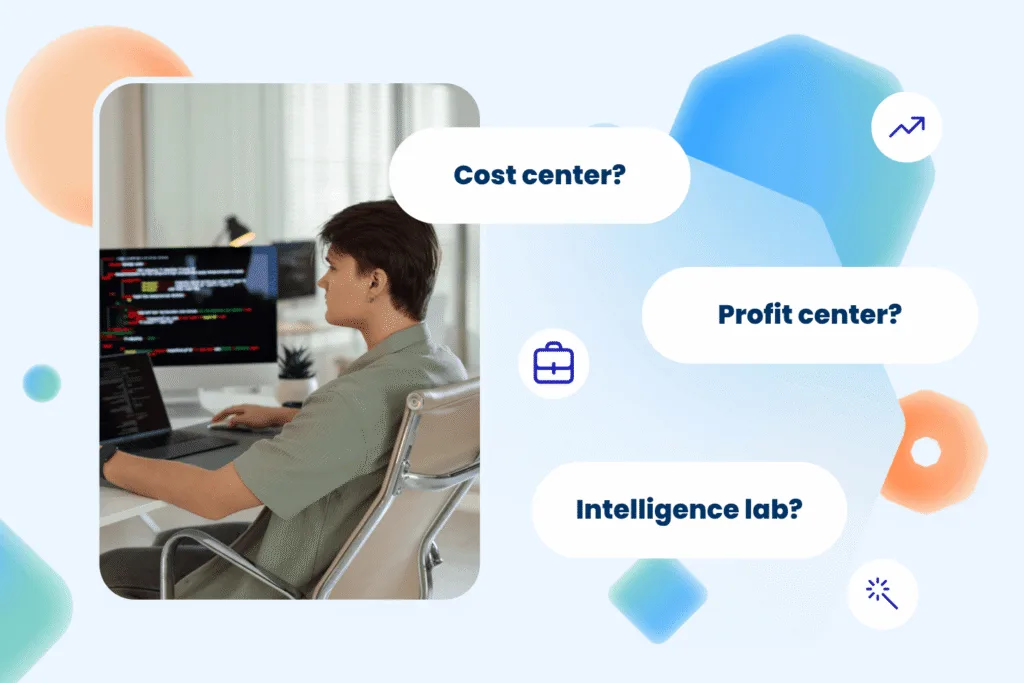
Before any checklist, answer this question: What is your support function actually here for?
The answers can be any of these three:
- Cost center: Support exists to resolve issues effectively and efficiently. Key metrics are speed and cost-per-ticket. This model works if client relationships are owned at the account level.
- Profit center: Support drives retention and expansion. Engineers are also trained to identify upsell signals and growth opportunities for the business. CSAT and Net Revenue Retention are what you’re optimizing for.
- Intelligence lab: Support surfaces risks and opportunities across client environments. Ticket data feeds QBRs, information security reviews, and proactive recommendations.
Most MSPs say they’re a strategic partner but they actually operate like a cost center. That gap (between stated positioning and actual behavior) is where client trust quietly erodes. It’s important to gain clarity on which one you actually are as everything else builds from here.
Pro tip:
There’s no wrong answer here as each model has legitimate use cases. The mistake is running a Cost Center operation while pitching clients on a strategic partnership. Your support philosophy should be visible in your SLAs, your metrics, and how you onboard engineers. Misalignment at this level isn’t a communication problem, it’s a structural one.
Step 1: Audit what you’re actually delivering
Before you scale anything, it’s important to have an honest picture of what’s actually happening.
Pull 90 days of ticket data and examine:
- What percentage of issues are resolved at Tier 1 versus escalated?
- What are your actual response and resolution times against contracted SLAs?
- Which client environments are generating the most noise, and why?
Why this matters:
Industry benchmarks from MetricNet put the average first-contact resolution rate at 74%, with top performers hitting above 90%. If your numbers are significantly below that, you’re not ready to scale. You’re ready to fix. The average MSP helpdesk escalation rate sits around 30%, and every unnecessary escalation compounds resolution cost across tiers.
ASK YOURSELF:
Where is the real bottleneck in your delivery chain right now?
Is it a people problem, a process problem, or a tooling problem?
Step 2: Defining the tiers you’re actually staffing for
Most MSPs have a Tier 1/2/3 structure that looks clean on paper, but comes across messy in practice. Here’s how it usually plays out:
- Engineers get pulled upward because Tier 1 isn’t trained deeply enough when it comes to the technical side
- Senior engineers also spend time on L1 tickets because escalation criteria aren’t defined clearly
- Everyone’s covering the gaps, but nobody’s saying it out loud
The fix: Have a framework that defines clear ownership and handoff points across tiers and across any external teams or vendors you’re working with. If you’re using outsourced support capacity, this clarity becomes even more critical.
If your escalation structure isn’t explicit, it doesn’t exist.
Ask yourself:
- If your Tier 1 team had to operate for four hours without escalation access, what would break?
- What does that tell you about your knowledge transfer gaps?
Need dedicated Tier 1 support that actually stays at Tier 1? LTVplus builds fully managed trained support teams that integrate into your existing operation so your senior engineers can focus on the work only they can do.
Step 3: Standardize before you scale
If your team can’t resolve your most common issues from a documented process, you’re scaling your knowledge gaps alongside your headcount. That’s a painful (and expensive) way to grow.
According to HDI research, knowledge management is one of the most widely adopted ITSM processes. Organizations that use it effectively see measurable reductions in ticket volume and improvements in customer satisfaction. The methodology with the strongest track record is Knowledge-Centered Service (KCS), developed by the Consortium for Service Innovation.
THE CORE PRINCIPLE OF KCS:
Knowledge gets created and captured as a byproduct of solving problems, not as a separate documentation project.
For MSPs, this means engineers build and refine runbooks and resolution guides every time they close a ticket. Not in quarterly documentation sprints, but in every single ticket.
Ask yourself:
- What are your top 10 ticket categories by volume?
- Does a documented resolution process exist for each one?
Step 4: Build a coverage model that reflects reality
Most MSPs underestimate coverage complexity until it’s already causing delivery problems. The warning signs appear when you’ve:
- Added clients across different time zones
- Taken on contracts with 24/7 SLA commitments
- Recently absorbed another firm’s client base
The solution is demand forecasting:
- Understand when tickets are actually coming in, at what volume, and what skills they require. Build staffing patterns around real data, not around what’s always been done.
- This is also where structured external capacity makes operational sense. When demand is high-variance or you need around-the-clock coverage without burning your internal team, a reliable overflow model isn’t just a cost decision but a delivery decision.
Staffing for the business you had last year will fail the business you have today.
Ask yourself:
- Do your current staffing patterns reflect actual ticket demand?
- Or are they based on assumptions your client base has already outgrown?
52% of MSPs can’t find enough technicians. We fix that.
Not a staffing agency. We recruit, manage, and retain — so you focus on growing your MSP.
Step 5: Define what “good” looks like at every level

Scaling breaks down fast when there’s no shared definition of good performance. Without it:
- Engineers don’t know what they’re actually being measured on
- Managers make inconsistent calls
- New hires get evaluated on gut feel
The fix is a simple competency framework for each role in your support operation:
- Map roles to responsibility levels
- Define the skills each role requires
- Write performance expectations, not just job descriptions
- Make career progression visible
Here’s a stat that should sting: research consistently shows that 31% of employees quit within six months of being hired, with unclear job expectations cited as a leading reason. In a sector where institutional knowledge is everything, that kind of turnover is expensive. Unclear expectations are a retention problem disguised as a performance problem.
Ask yourself:
- Could your engineers clearly explain what they need to demonstrate to move to the next tier?
- Would their manager give the same answer?
Pro tip: Build the competency framework before the next round hiring, not after. Defining “good” is far easier when it’s not tied to evaluating a specific person. Use your top performers as the benchmark and reverse-engineer what they do, then document it.
Step 6: Onboard clients the way you onboard staff
This is where most MSP growth stories develop their first cracks. The deal gets closed. Ops gets handed a new environment, partial documentation, and a go-live date. The existing client base starts to feel the distraction.
Moving a new client from signed to live without destabilizing what’s already running requires:
- Defined onboarding stages with clear internal ownership
- Documentation requirements before go-live
- A hypercare period with explicit exit criteria
Remember, every chaotic client onboarding is a process gap, not a people problem. The cost is invisible but it shows up in stressed engineers, missed SLAs, and clients who quietly start looking elsewhere.
Ask yourself:
- Do you have a written onboarding protocol your ops team follows consistently?
- Or does every new client look different depending on who’s leading it?
Step 7: Build an SLA structure that matches service complexity
As your client base grows, a flat SLA structure becomes a liability. Clients with different environments, risk profiles, and contract values shouldn’t be on identical commitments.
A growing number of forward-looking MSPs are also layering XLAs (Experience Level Agreements) alongside traditional SLAs.
- SLA = measures what you did (response time, uptime percentage)
- XLA = measures how the client experienced it
That’s a meaningful distinction if you’re positioning as a strategic partner. Hitting your SLA numbers while losing client trust is a sign your metrics aren’t measuring the right things. Clients aren’t measuring your performance against your SLA document but they’re measuring it against how they feel after every interaction.
Ask yourself:
- Are your current SLAs creating the right incentives for your team?
- Or are engineers technically hitting targets in ways that don’t reflect actual experience?
How the skincare brand is nailing customer service
The story of how RoC Skincare achieved a CSAT score of 4.68 out of 5 with a dedicated chat support team.
Step 8: Build a major incident process that doesn’t live in someone’s head
Every MSP has a war story. Maybe it’s a Priority 1 incident that went sideways because no one knew who was in charge. Communication broke down. The right people were pulled in too late.
The framework with the strongest pedigree here is ICS (Incident Command System), originally developed for emergency response and widely adapted into IT major incident management. ICS solves the “who’s in charge?” problem by defining clear command roles, communication protocols, and decision rights before anything goes wrong.
So when a client environment goes down at 2:00 AM, your team knows exactly what to do and they execute a defined process. They don’t figure it out in real time.
Clients tolerate outages.
What they don’t tolerate is silence.
Ask yourself:
- If a P1 happened tonight, would every person involved know their specific role?
- Would your client get a proactive update within the first 30 minutes?
Step 9: Turn support data into business intelligence
Your support team generates valuable signals every single day. Engineers are seeing what’s breaking and why, what clients are confused or frustrated by, and what risks are quietly emerging across environments.
But if all that data isn’t being fed into your account management, QBRs, security reviews, or tooling decisions, it’s sitting in your ticketing system doing nothing. Most MSPs are sitting on a goldmine of client insight and calling it a ticket queue.
The fix: A simple, structured debrief between support leadership and account leadership (weekly or monthly, depending on your size) can turn your helpdesk into one of your most valuable business intelligence assets.
Ask yourself:
- In the last quarter, how many client retention or expansion decisions were directly informed by patterns your support team surfaced?
Step 10: Design for absorbing growth, not just current state
This is the step that determines whether you can actually grow without things wobbling. Building a resourcing model that flexes with demand means two things:
- Knowing your internal capacity threshold: The point at which adding workload starts degrading delivery quality
- Having a written plan for when you hit it: Cross-training, overflow protocols, or a structured relationship with an external partner
The goal isn’t idle capacity sitting on the bench. It’s a fast, predictable path to additional support when demand spikes. Whether that’s absorbing a new acquisition, covering an unexpected departure, or meeting a client who just signed a more demanding SLA.
The MSPs that absorb growth well aren’t just good operators. They planned for it.
Ask yourself:
- Do you know your current internal capacity threshold?
- If a major new contract came in next week, what would you actually do?
So, are you ready to build your checklist?
Here’s what usually happens when leaders work through this:
Some find that Step 3 is where everything stalls because they’re scaling on undocumented processes. Others discover that Step 6 is where every growth push breaks down.
A few realize they’ve never honestly completed Step 1 with real data. And that’s exactly the point. These diagnostic questions aren’t rhetorical. They’re the actual work.
LTVplus is the trusted CX outsourcing partner for MSPs and global service businesses
LTVplus delivers flexible, scalable customer support teams that grow with your business, regardless of what stage you’re in.
FAQs
What’s the most common reason MSP scaling efforts fail?
Most MSPs fail to scale because they copy frameworks designed for other organizations without first auditing their own operations. Tactics without strategy are just a list of things to do. The starting point is always an honest assessment of what’s actually happening in your delivery chain right now, not what your SLA document says.
How do I know if my MSP is ready to take on more clients?
The clearest indicator is whether your current service delivery is stable and documented at scale. If Tier 1 requires frequent escalation, if your top 10 ticket categories don’t have documented resolution processes, or if new client onboarding regularly disrupts existing clients, you’re not ready to add volume. You’re ready to fix the foundation.
What’s the difference between an SLA and an XLA?
An SLA (Service Level Agreement) measures operational outputs: response times, uptime percentages, resolution rates. An XLA (Experience Level Agreement) measures how the client actually experienced the service. An MSP can hit every SLA target and still be losing client trust if the experience doesn’t match the numbers. XLAs are increasingly used by MSPs positioning as strategic partners rather than transactional helpdesks.
How should MSPs handle major incidents at 24/7 scale?
Use a structured incident command framework (ICS is the most widely adopted) that defines roles, communication protocols, and decision rights before an incident occurs. The key principle: clients tolerate outages. What they don’t tolerate is silence. Proactive communication within the first 30 minutes of a P1 incident is a standard worth building into your process explicitly.
When does external support capacity make sense for an MSP?
External capacity makes operational sense when demand is high-variance, when 24/7 coverage would burn your internal team, or when a new acquisition or large contract exceeds your current headcount capacity. The goal isn’t replacing internal engineers but having a reliable, fast path to additional support when demand spikes, without scrambling every time it happens.
Your technical team is ready.
Tell us about your support gaps. We’ll show you exactly how we fill them.



Want a real strategy session?
Book a free consultation and we'll design a support plan tailored to your business.